
1-3 April 2027
Grand City Convex
Surabaya – Indonesia
Grand City Convex
Surabaya – Indonesia
10-09-2025
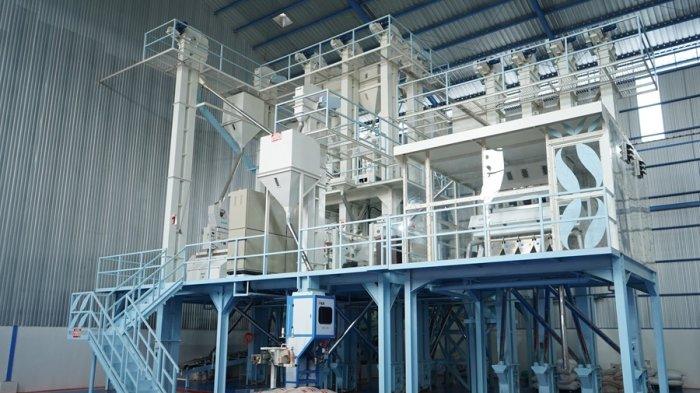
In Indonesia, the rice milling sector is divided into two main categories: about 2,000 large-scale mills and around 172,000 small-scale mills.
1. Large Rice Mills – Latest Technological Innovations
Modern mills, especially Rice Milling Units (RMU) and Commercial Rice Milling Plants (CRMP), have become key in improving quality and efficiency for premium rice production. The Ministry of Agriculture emphasizes the importance of complete machine configurations—such as cleaner–husker–separator–polisher—which can increase milling yield by up to 1.9% compared to basic models (pustaka.bppsdmp.pertanian.go.id).
2. Small Rice Mills – Challenges & Solutions
Small-scale mills (PPK) usually rely on basic setups (husker and polisher), often run with limited manpower and little technical guidance. Their average yield remains around 61.4% (pustaka.bppsdmp.pertanian.go.id). Many operators also lack the knowledge to optimize equipment use.
Technical solution: Revitalizing small mills with additional tools like cleaners and separators can improve yields and product quality, while increasing profitability for small entrepreneurs.
3. Government Role – People’s Business Credit (KUR)
The government supports small mill revitalization through the People’s Business Credit (KUR) program, offering affordable loans for equipment upgrades or business expansion (kur.ekon.go.id, Antara News).
· The Indonesian Rice Milling and Rice Entrepreneurs Association (Perpadi) has proposed raising the KUR ceiling from Rp 500 million to Rp 2 billion to accelerate small mill revitalization (Antara News).
· Official government statements confirm that KUR distribution is directed toward revitalizing rice milling and drying, with special schemes for micro and small enterprises (kur.ekon.go.id).